Carry the Color: One Deep Red From Your Outfit to the Table
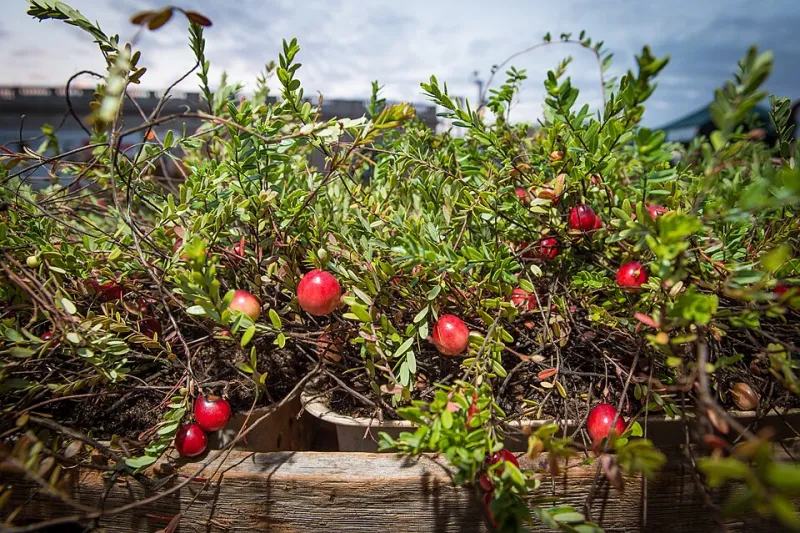
Photo: Lance Cheung, Public domain, via Wikimedia Commons
Holiday style and holiday tablescaping usually get planned in separate rooms. You pick an outfit for the party, then you pick a table for the room. But the two are looking at each other all night. A single deep red—cranberry, oxblood, garnet—can act as a quiet through-line between them, a visual rhyme that reads designed without looking like you tried to match the napkins to your sweater.
At Ohasu Days, we like a through-line more than a theme. A theme says snowflakes and reindeer. A through-line says: someone chose a color and let it echo. That is the difference between a holiday look and a holiday system.
Why One Color Beats a Theme
A theme is loud in one direction. A through-line is quiet in two. When your outfit carries a deep red and the table answers with a smaller version of the same shade, the eye connects them without needing a label. It works because repetition is one of the oldest design tricks there is. You are not decorating a room to look like a catalog page. You are giving the evening a color story.
The key is restraint. Pick one red and treat it as a guest, not the host. Cranberry, oxblood, and garnet are close enough to feel related but distinct enough to matter. Choose the one that flatters you or the one already living in your closet. Then let the other elements—cream, charcoal, camel, wood, brass—do the steady work.
The Proportion Rule: Let the Red Be a Guest, Not the Host
Think of the deep red as roughly ten to twenty percent of what the eye sees. On the body, that might be a sweater, a scarf, a pair of tights, or a bag. On the table, it might be candles, napkins, a glass, or a ribbon. If the outfit is red-heavy, keep the table red-light. If the table is red-heavy, keep the outfit red-light. Two strong reds in the same frame start to compete; one strong red and one small echo start to converse.
For hosting, this usually means the table gets the larger gesture—cranberry tapers, garnet glassware, oxblood linen napkins—and the outfit gets a single accessory. For attending, flip it. Wear the red; let the host's table be the answer.
Texture Does the Heavy Lifting
When you repeat a color, vary the surface. A matte wool sweater and a glossy ceramic vase in the same deep red feel intentional because the texture changes the way the color reads. A silk scarf against a linen tablecloth does the same thing. So does velvet ribbon next to clear glass, or a brushed cotton napkin beside a polished brass candlestick.
The rule is simple: same hue, different hand. If everything is matte, the red goes flat. If everything is shiny, it gets costume-y. Mix one soft texture with one crisp one and the color stays interesting without getting louder.
Three Pairings That Work
1. Host at Home: Oxblood Knit and Cranberry Tapers
Start with an oxblood crewneck and charcoal trousers. No other red on the body. At the table, use a cream cloth, clear water glasses, wood tones, and a pair of cranberry taper candles. The candles are the echo; the sweater is the anchor. If you do not have tapers, fold cranberry napkins flat under the forks. If you do not have oxblood, a garnet scarf on a black knit does the same job.
2. Guest at a Dinner: Garnet Scarf and a Cranberry Glass
A camel coat, dark denim, and a garnet scarf is enough. As a host gift, bring cranberry glass votives or a bottle with a deep red label—something that continues the thread without asking the host to change their table. Your scarf becomes the outfit's one red note; the gift becomes the table's. If you are traveling light, swap the scarf for cranberry socks or a bag strap. The color still registers.
3. Low-Key Friendsgiving: Cranberry Tights and a Napkin Stack
This one is for the casual end of the season. Charcoal skirt, cream sweater, black boots, cranberry tights. At the table, keep white plates and brass candlesticks, then stack cranberry napkins at each place. The tights and the napkins are the same idea at two different scales. If tights are not your thing, a cranberry beanie, gloves, or a ribbon tied around the napkin stack works just as well.
Practical Swaps, Not New Purchases
The best version of this idea uses what you already own. A deep red scarf, a pair of tights, a knit hat, a cloth napkin, a candle, a ribbon, a glass, a bottle of wine with a dark red label. You do not need a new wardrobe or a new tablescape. You need one item that can travel between the two.
If you are hosting and attending in the same weekend, pick one red piece that can do both. A garnet scarf can dress up a dinner outfit and drape over a chair at your own table. Cranberry napkins can sit under your plates on Friday and go to a friend's house as a host gift on Saturday. The through-line is not about buying more. It is about choosing one thing and letting it repeat.
A Note on Undertone
Cranberry leans blue-red. Oxblood leans brown-red. Garnet is clearer and a little brighter. Any of them can work, but pick one and stay in that family. If your skin looks better in cool tones, cranberry is usually the easiest. If you prefer warmth, oxblood is forgiving. Garnet sits in the middle and reads festive without tipping into candy-cane territory. The point is not to overthink it. The point is to choose a red that looks like it belongs to you.
The Point Is the Rhyme
You are not matching your outfit to your table. You are giving the evening a color that appears twice, at two different scales, in two different textures. That is what makes it feel intentional. The cranberry thread is not a theme. It is a small design decision that makes the room and the person in it look like they belong to the same story.