Your Holiday Guest Room Shouldn’t Peak in December: Nine Moves That Work All Year
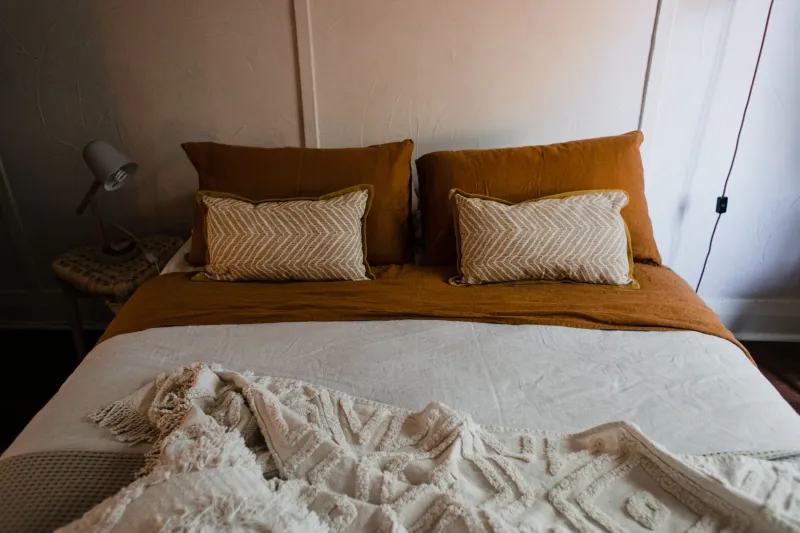
The guest room is often the last room to get design attention. It absorbs the extra boxes, the folding chair, the bedding that does not match anything else. Then the holidays arrive, and suddenly the room has a job: make someone feel welcome after a long flight or a long drive. The good news is that a guest room does not need a full renovation to rise to the occasion. It needs a handful of decisions that work just as well in January as they do in December.
Think of the room as a small hotel suite with your personality in it. The holiday layer can be temporary, but the bones should be useful all year. Here are nine design-forward touches that make holiday hosting feel considered—and stay on duty after the tree comes down.
1. Add a warm, dimmable light source
Overhead lighting is for finding lost socks. A bedside lamp with a warm bulb is for reading, settling in, and not feeling like you are in a dentist's office. Choose a lamp with a simple shade and a bulb around 2700K, then add a dimmer plug or smart plug if the lamp does not have a dimmer. During the holidays, set it on a timer so the room feels lit when guests arrive. The rest of the year, it is a reading light that makes the room feel less like a spare room.
2. Layer a washable quilt at the foot of the bed
A quilt or coverlet is the fastest way to add color and texture without committing to a new duvet. Pick a washable option in a deep olive, ink blue, camel, or muted plaid. During the holidays, it reads festive without shouting. In February, it is still the layer guests reach for when the heating is unpredictable. A throw at the foot of the bed also gives the room a finished look, which matters more than matching every pillow.
3. Hang a slim mirror and a hook for the jewelry moment
Borrowed from fashion styling: give guests a place to land their accessories. A slim full-length mirror near the closet or door helps with outfit checks. A single brass or wood hook keeps necklaces and scarves off the nightstand. During the holidays, this is the spot for sparkly things and going-out bags. In everyday life, it keeps the room from becoming a pile of belts and tote bags.
4. Choose a clean scent, not a candle shop
Scent is part of design, but a guest room should not smell like a mall. A reed diffuser, a linen spray, or a small dish of cedar blocks can make the room feel fresh without overwhelming it. Holiday scents can be subtle—fir, cedar, bergamot—but keep the intensity low. After the holidays, switch to fig, linen, or a simple citrus. The test is whether the scent is noticeable at the doorway and invisible by the bed.
5. Style a bedside tray with hotel logic
A tray corrals the small things that otherwise scatter: a water glass, a coaster, a book, a phone, a small vase. Choose a tray with a matte finish or a woven texture, and keep it to three or four objects. During the holidays, add a tiny seasonal sprig or a wrapped chocolate. The rest of the year, the tray stays useful. This is one of the easiest ways to make a guest room look intentional without adding clutter.
6. Put a fashion-forward throw on the bed
A throw is a small piece of styling that can carry a lot of personality. Think houndstooth, a wide stripe, faux shearling, or a bold orange if you are feeling adventurous. Borrowed-from-fashion details work because they add pattern and texture without requiring a new furniture purchase. During the holidays, it makes the bed look layered for photos and cozy for guests. In everyday life, it is the blanket someone grabs for a nap.
7. Give the suitcase a real home
A folding luggage rack or a small bench at the foot of the bed solves a very specific hosting problem: where does the suitcase go? Without a plan, it ends up on the bed or the floor. A rack is inexpensive, folds away, and makes the room feel like it was expecting company. A bench does the same and can hold a tray or a folded throw when it is not in use. This is a small piece of furniture that earns its keep.
8. Build a three-object welcome vignette
Skip the basket of random samples. Instead, style a small welcome moment with three objects: a book or magazine, a small vase or ceramic, and a tray or dish. It can sit on the dresser or the bedside table. During the holidays, add a handwritten note or a local treat. After the holidays, rotate the book and the object. The vignette gives guests something to look at and gives the room a focal point that is not the bed.
9. Choose a guest-proof textile palette
White bedding is beautiful, but it is not always practical. A patterned duvet cover, dark hand towels, and a washable rug can make the room more forgiving without making it look like a hotel. Choose a calm base—warm white, oatmeal, soft gray—and add color through the quilt, throw, and pillows. During the holidays, add one festive accent pillow that can be removed in January. The base stays, the holiday layer changes, and the room works for the rest of the year.
What Stays After the Holidays
The best holiday guest room is not the one with the most decorations. It is the one where a guest can find a lamp, set down a glass, hang a coat, and charge a phone without asking. The holiday layer should be the accent, not the whole story. When the garland comes down, the room should still feel like a place where someone can rest.
Budget-Friendly US Sources
You do not need to buy everything at once. Start with the light source, the tray, and one textile layer, then add the rest over time.
- Target: Threshold lamps, washable quilts, trays, and simple picture frames.
- IKEA: Dimmable bulbs, dimmer plugs, hooks, luggage racks, and basic mirrors.
- HomeGoods and TJ Maxx: Mirrors, vases, throws, and one-off trays at lower prices.
- Amazon: Dimmer plugs, valet trays, linen spray, and folding luggage racks—check reviews for quality.
- Thrift stores and estate sales: Trays, books, small lamps, and ceramic vases with more character.
- Local hardware stores: Warm LED bulbs and dimmer switches for hardwired lamps.
- Grove Co. or similar: Refillable hand soap and clean-scent linen sprays for the bedside.
A final note for the 2026 holiday season: order early if you are shopping online, and prioritize the pieces that solve a real guest problem. The goal is not a catalog-perfect room. It is a room that says, quietly and clearly, that you thought about the person staying in it.