The Glow Is the Floor Plan: Five Steps to a Living Room That Feels Designed After Dark
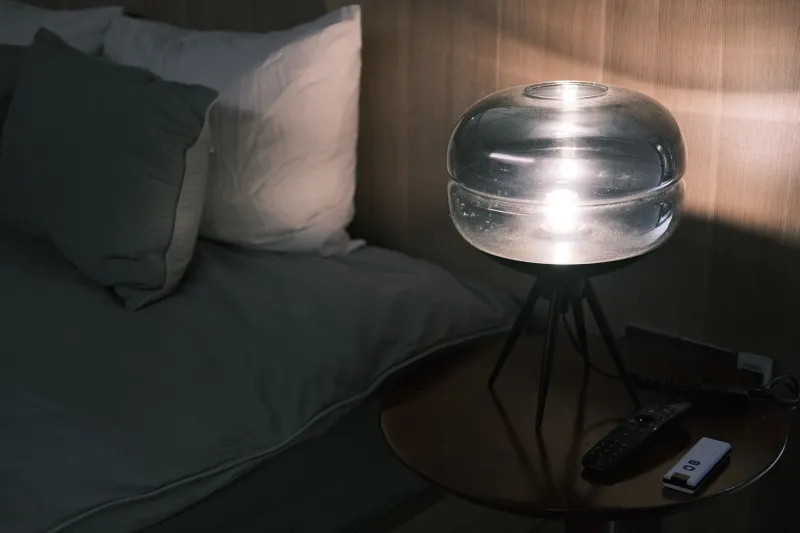
Walk into a living room at 8 p.m. and you know in three seconds whether it works. Not because of the sofa. Because of the light. A room with a single overhead fixture can have a $6,000 sectional and still feel like a waiting room. A room with three small, well-placed lamps can have a thrifted couch and feel like a hotel bar in the best way.
That’s why I put lamps before sofas. Lighting isn’t the finishing touch; it’s the floor plan. It decides where people sit, where they read, where they linger. If you’re starting from scratch—or just tired of your living room after dark—here’s the sequence I’d follow.
1. Kill the Overhead-Only Habit
The first step is not buying a lamp. It’s turning off the ceiling light. Overhead lighting in a living room is for cleaning, finding a lost earring, or unpacking groceries. It is not for living. Once you commit to layered light, the room changes.
2. Put a Lamp in the Darkest Corner
Every living room has a corner that disappears at night. That’s your first lamp. A floor lamp with a linen shade, a table lamp on a slim console, or a wall sconce if you have an outlet. The goal is to lift the corner without lighting the whole room like a showroom. Choose a shade that’s wide enough to cover the bulb and harp—nothing looks cheaper than a tiny shade on a big base. The bottom of the shade should hit around eye level when you’re seated, not above it.
3. Add a Task Light Where You Actually Sit
Next, light the spot where you read, knit, scroll, or eat dinner on the couch. A table lamp beside the sofa or a floor lamp behind a chair. This is your task layer. It should be brighter than the ambient lamp—but still warm. Put it on a dimmer if you can. If you can’t, choose a bulb that’s dimmable and add a smart plug. The point is control. A task light that’s always at full blast is just a second overhead light.
4. Use a Third Source for Glow, Not Illumination
The third layer is the one people skip: accent light. A small lamp on a bookshelf, a picture light over a print, a candle warmer, a rechargeable table lamp on a tray. It doesn’t need to light the room. It needs to create a pool of warmth that makes the room feel inhabited. This is where you can be a little weird—a colored shade, a sculptural base, a vintage find from Facebook Marketplace. The third source is the jewelry of the room.
5. Choose Bulbs Like You Mean It
Bulb temperature is the difference between “cozy” and “dentist office.” For living rooms at night, aim for 2700K. That’s warm white, slightly golden. 3000K is fine for a task lamp if you need to see details, but don’t make it the main event. Avoid anything above 3000K in the evening. Also look at lumens, not watts: 450–800 lumens per lamp is usually enough for ambient and task light. And make everything dimmable. A dimmer is the cheapest renovation you can do.
The Five-Step Lighting Plan
- Turn off the overhead light after 6 p.m.
- Place one ambient lamp in the darkest corner.
- Add one task lamp beside your main seat.
- Add one accent light at a different height.
- Switch to 2700K dimmable bulbs and a dimmer.
Common Mistakes to Avoid
Overhead-only lighting. It flattens everything—people, art, furniture. If you have recessed lights, put them on a dimmer and use them sparingly.
Cool bulbs at night. 4000K and 5000K bulbs make a living room feel like a conference room. Save them for the garage.
Matching lamps in a symmetrical pair. A pair can work, but it often looks like a furniture showroom. Mix heights and shapes. Aim for a triangle of light, not a mirror.
Shades that are too small. The shade should be proportionate to the base and wide enough to soften the bulb. If you can see the bulb from across the room, the shade is too small.
Lamps that are too low. A table lamp should be tall enough that the shade sits near eye level when you’re seated. A floor lamp should clear the back of the sofa.
No dimmer. If you can’t dim it, you’ll rarely use it. A dimmer switch or smart plug costs less than a throw pillow.
The Room After Dark
A well-lit living room doesn’t need a renovation. It needs three light sources at different heights, warm bulbs, and a willingness to turn off the big light. Start with the darkest corner. Then the chair. Then the shelf. By the time you’re done, the sofa will look better, the art will look better, and you’ll want to stay up a little later. That’s the test. The glow is the floor plan.