Before You Grab the Keys: Five Winter Looks Built Backward From the Coat
Most of us get dressed from the inside out. We pick the sweater, the trousers, the boots, and then grab whatever coat is closest on the way out. It works, but it also explains why so many winter outfits feel like a base layer with a coat thrown over it. The coat is the piece people see for the first ten minutes of your day and the last ten minutes of your night. It deserves first billing.
This is not a argument for buying a new coat every season. It is a argument for building the outfit backward. Start with the outerwear, decide what it is doing, and let the rest of the look support it. Think of it as a coat-first check in the hallway mirror: if the coat is not leading, the outfit is not finished.
1. Cropped puffer, tailored trousers, and a clean boot
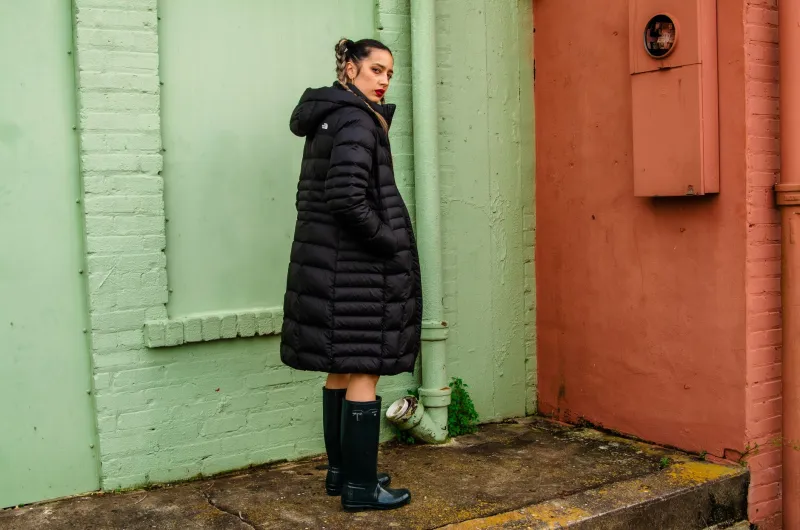
The cropped puffer is the easiest coat to make look deliberate because it gives you a clear waistline. Pair it with tailored trousers that sit at the natural waist and fall straight to the shoe. The puffer should hit at the waist or just below it, not at the hip. That small gap is what keeps the proportion from turning into a snowman silhouette.
For color, let the puffer be the anchor: black, olive, or a deep navy. Keep the trousers in gray, cream, or a muted brown. A black puffer over gray wool trousers and a black leather boot is about as foolproof as winter gets. If you want a little more polish, add a slim shoulder bag and a knit beanie that sits close to the head. Skip the oversized scarf here. The coat is short and structured, and a big scarf will swallow the neckline.
At the entryway, check the hem of the trousers against the boot. A tiny break is good. A pool of fabric is not. The cropped puffer already adds volume up top, so the lower half should stay clean.
2. Long wool coat, tonal knitwear, and a column of color
A long wool coat is the closest thing winter has to a room divider. It changes the shape of everything underneath. Use that to your advantage by building a tonal column: a knit sweater and trousers or a skirt in the same color family as the coat, just a shade or two apart. Camel coat, cream knit, oat trouser. Charcoal coat, gray knit, black trouser. The point is not to match exactly. The point is to keep the eye moving in one direction.
Proportion matters here. The coat should be the longest layer, ideally hitting mid-calf or just below the knee. The knit should be tuckable, not bulky at the waist. If you are wearing a skirt, keep the boot close to the leg so the hem does not fight the coat. A structured tote and leather gloves finish the look without adding noise.
This is the formula for a day that starts with a meeting and ends with dinner. It reads polished at the table and still works on the street. In the entryway, leave the coat open if the knit is the same tone. Belt it if you want a sharper line. Either way, the coat is doing the talking.
3. Shearling, slim denim, and a grounding boot
Shearling is texture, so it needs a quiet partner. Slim denim is that partner. Not skinny, not baggy. A straight-leg jean that skims the ankle is the sweet spot. Tuck it into a boot or let it break once over a chunky sole. The shearling can be cropped or hip length, but keep the rest of the outfit close to the body. Volume on volume is a styling choice, but it is a harder one to control on a Tuesday morning.
Color is where this look gets fun. A cream shearling over dark indigo denim and a brown boot feels warm without trying too hard. A black shearling over washed black denim is a little more city. Add a simple belt and a small crossbody, and you are done. No statement necklace, no giant scarf. The coat is the texture story.
One entryway check: make sure the sleeve of the shearling does not swallow your hands. If it does, push the sleeves up once. A little wrist showing keeps the look from feeling heavy.
4. Trench over a suit, with the belt as the deciding vote
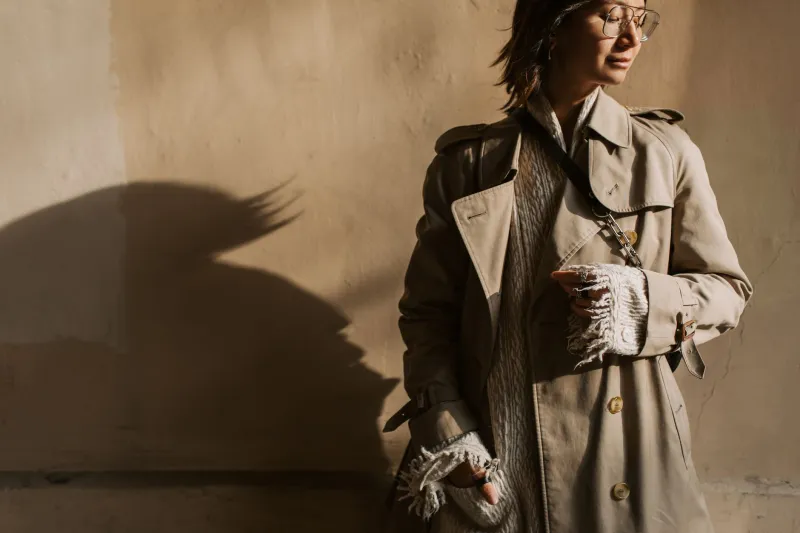
The trench is not just a fall coat. Layered over a suit, it becomes a winter outfit with a little extra room for a thin sweater or a scarf. Keep the suit relaxed: a straight-leg trouser and an easy blazer, not something tight. The trench should be long enough to cover the jacket but not so long that it drags. Stone, khaki, or black are the easiest colors. Navy suit, white shirt, stone trench is a classic for a reason.
Accessories should stay quiet. A slim briefcase or a structured tote, a leather loafer or a clean boot, and maybe a watch. The belt on the trench is the deciding vote. Belt it for a sharper, more deliberate line. Leave it open for a looser commute look. Both work, but pick one before you leave the house.
This is the formula for a US city winter where the cold is real but the sidewalks are clear. It looks just as good walking into a coffee shop as it does walking into an office. The coat is not hiding the suit. It is framing it.
5. Statement color coat, neutral basics, and one strong boot
A colored coat is the fastest way to make winter feel less gray. The trick is to let it be the only loud thing. Start with a red, emerald, or cobalt coat, then build the rest in black, cream, or denim. A red coat over a black knit, black trousers, and a black boot is simple but not boring. An emerald coat over cream denim and a brown boot feels a little more relaxed.
Proportion is simple here: the coat should be the longest layer, and the basics should be close to the body. If the coat is midi, keep the trouser straight or slim. If the coat is short, let the trouser be a little wider. The boot should ground the color, not compete with it. Black or brown leather is usually enough.
At the door, take one thing off. If you are wearing a colored coat, a printed scarf, and a bright bag, the coat stops leading. Pick one accessory and let the rest recede. The coat is the main character. The outfit is the supporting cast.
The coat-first check
None of these formulas require a new wardrobe. They require a different order of operations. Before you grab your keys, look at the coat and ask what it is doing. Is it creating a waistline? Adding texture? Framing a suit? Carrying the color? If the answer is clear, the rest of the outfit can follow. If it is not, swap one piece, not all of them.
Winter dressing gets easier when you stop treating the coat as a necessity and start treating it as the first design decision. The hallway mirror is the test. The street is the proof. And the best part is that a coat-first outfit usually looks just as good coming home as it did going out.