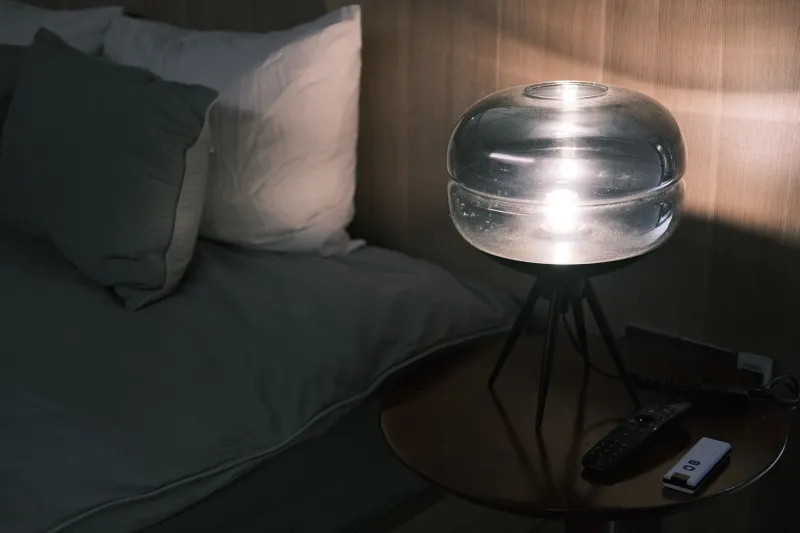
Give the Sideboard Some Air: The Three-Object Rule That Makes a Room Read Finished
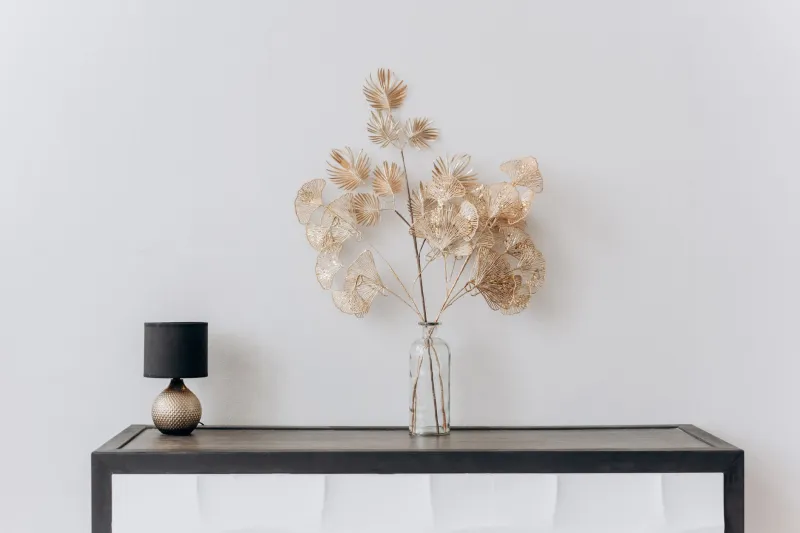
A console table with nothing on it can look like a missed opportunity. A console table with everything on it looks like a craft store exploded. The sweet spot is almost empty: three objects, one surface, enough negative space that the room can breathe. This is not minimalism as a personality. It is a styling rule that makes a rental living room, a narrow entry, or a dining sideboard read finished without asking you to buy another piece of furniture.
The argument is simple. Most surfaces fail because they are styled in layers instead of proportions. We add a candle, then a stack of books, then a bowl, then a seasonal garland, and suddenly the eye has no place to land. Three objects give the eye a rhythm: tall, low, and in-between. They also force you to choose objects with actual scale, which is the part that makes a room look designed rather than decorated.
Why three objects work
Three is enough to create a composition and few enough to leave air. It also prevents the usual trap of using small objects to fill space. A tiny figurine, a tiny dish, and a tiny framed quote do not add up to a styled surface; they add up to visual noise. One large lamp, one medium bowl, and one small framed print do more work because the sizes are doing the talking.
The rule is not about depriving yourself. It is about giving each object a job. One object can provide height. One can provide texture or color. One can provide a personal story. If two objects are doing the same job, one of them is probably clutter.
The scale checklist
Before you place anything, measure the surface. On a standard console, aim for one object that takes up roughly one-third of the table's height, one that is wider than it is tall, and one that is small enough to sit in the negative space without disappearing. On a mantel, the same idea applies, but the mirror or artwork above counts as part of the composition, so keep the objects below it lower and quieter.
Check these five things:
- Height: Does the tallest object stop below the artwork or mirror, or does it compete?
- Width: Is there at least one horizontal object to keep the arrangement from looking like a row of bottles?
- Negative space: Can you see the surface between at least two objects?
- Visual weight: Does the arrangement feel heavier on one side? Offset it with a low bowl or a leaning frame.
- Repetition: Do the materials repeat in a way that feels intentional—two ceramics, one wood, one metal—rather than random?
Seven three-object recipes
-
Entry console: a slim table lamp, a shallow ceramic bowl for keys, and a small framed print leaning against the wall. The lamp gives height, the bowl gives function, the print gives a focal point.
-
Mantel: an oversized leaning mirror, a pair of low candlesticks treated as one object, and a small vase with one branch. The mirror does the heavy lifting; the candlesticks and branch keep it from feeling staged.
-
Dining sideboard: a tall vase with dried stems, a stack of two large books, and a low stoneware platter. This works because the books bridge the height gap between the vase and the platter.
-
Bedroom dresser: a small lamp, a rectangular tray for jewelry, and a single ceramic dish. The tray is the clutter manager; the dish is the decorative moment.
-
Rental living room console: a leaning framed print, a trailing plant in a simple pot, and a sculptural object with a matte finish. No holes in the wall, no visual pileup.
-
Narrow hallway table: a wall-mounted mirror above, a slim lamp, and a small bowl. Keep the lamp shade narrow so it does not block the walkway.
-
Entry bench with a shelf: a woven basket for gloves, a low stack of two books, and a small candle. The basket hides the mess; the books and candle make it look intentional.
Hide the cords without buying furniture
A almost-empty surface exposes every cord, which is why the three-object rule only works if you deal with the cables. You do not need a new media console. Start with adhesive cord clips on the back of the furniture, a cable sleeve in the same color as the wall, and a small basket or box behind the largest object. Command strips can hold a power strip to the underside of a console or sideboard without damaging rental walls.
For lamps, run the cord along the back leg and secure it with a clear zip tie. For chargers, use a single multi-port block hidden in a shallow drawer or behind a book stack. If the outlet is visible, a slim cord cover painted to match the wall is cheaper than a furniture upgrade. The goal is not to hide every wire forever; it is to make the surface read calm from three feet away.
The seasonal-decor trap
Holiday styling is where the three-object rule earns its keep. A console does not need a Santa, a garland, a candle, and a bowl of ornaments. Choose three objects and let one of them be seasonal: a bowl of pinecones, a single beeswax candle, a small vase of red berries. The rest of the surface stays quiet. That way the room feels dressed for the season without looking like a display table at a mall.
The almost-empty surface is not cold. It is edited. It says that someone chose the lamp, the bowl, and the print, and then had the confidence to stop. In a room that is already full of life—mail, keys, remote controls, a half-finished cup of coffee—that kind of restraint is a design move. Give the sideboard some air, and the whole room will look more finished.