The Inch That Makes the Outfit: Five Winter Looks Where Sleeve Meets Glove
Photo: Shixart1985, CC BY 2.0, via Wikimedia Commons
Most winter outfits get reviewed at the big landmarks: the coat, the boots, the bag. Fair enough. Those are the pieces doing the heavy lifting. But there is a smaller zone that quietly decides whether the whole look reads finished or just warm—the inch or two where your sleeve meets your glove.
It is the winter equivalent of a hemline. Nobody plans the outfit around it, but everybody notices when it is off. A sleeve that swallows the glove looks accidental. A glove that starts too low looks like an afterthought. And a bare strip of wrist in January is not a styling choice; it is a countdown to misery.
This is not about buying more. It is about giving the wrist a little breathing room and then closing it with intention. Five looks, five ways to do it.
Why the Wrist Reads as Finished
A finished winter look has a clear handoff. The sleeve ends, the glove begins, and the two acknowledge each other. That handoff can be a clean overlap, a deliberate contrast in texture, or a small flash of metal. What it should not be is a pileup—sleeve, sweater cuff, glove cuff, bracelet, watch, and a scrunchie all fighting for the same two inches.
The easiest rule: let the sleeve stop near the wrist bone, then let the glove take over. If it is truly cold, overlap them by half an inch to an inch. If it is milder, a small gap of sweater ribbing can work. But the moment should look like a decision, not a shortage.
Look 1: Tailored Wool Coat, Leather Gloves, One Thin Bracelet
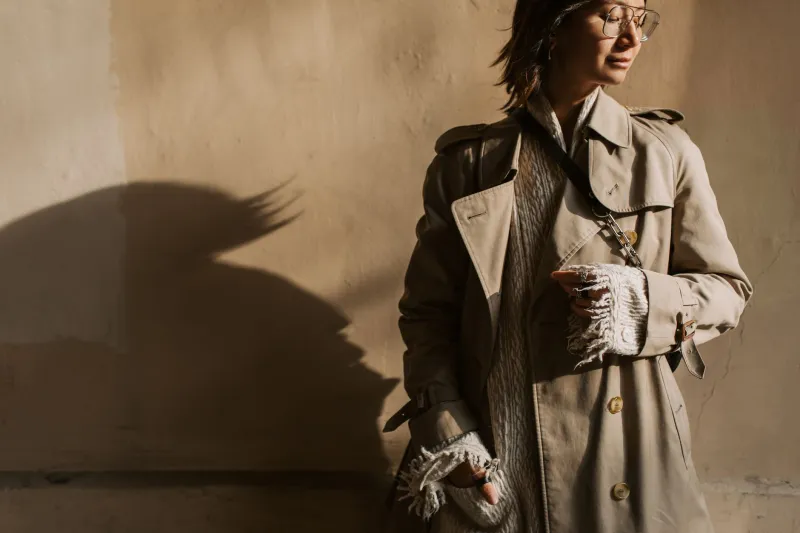
Start with the classic. A camel, charcoal, or navy wool coat with a sleeve that ends at the wrist bone. Add a fine-knit sweater underneath, dark straight-leg jeans, and leather gloves with a snug cuff. The leather should meet the wool cleanly—no bunching, no gap.
Here is where the quiet jewelry move comes in. If the glove cuff is close-fitting, a thin gold or silver bracelet worn over the cuff can look intentional and a little bit unexpected. It is not for every day or every glove. But on a dinner-out night or a workday when you want the outfit to feel considered, it gives the wrist a finish without adding bulk.
Keep the rest simple. Small earrings, no chunky watch, and a bag that does not compete.
Look 2: Puffer and Knit Mittens, With the Cuff Doing the Work
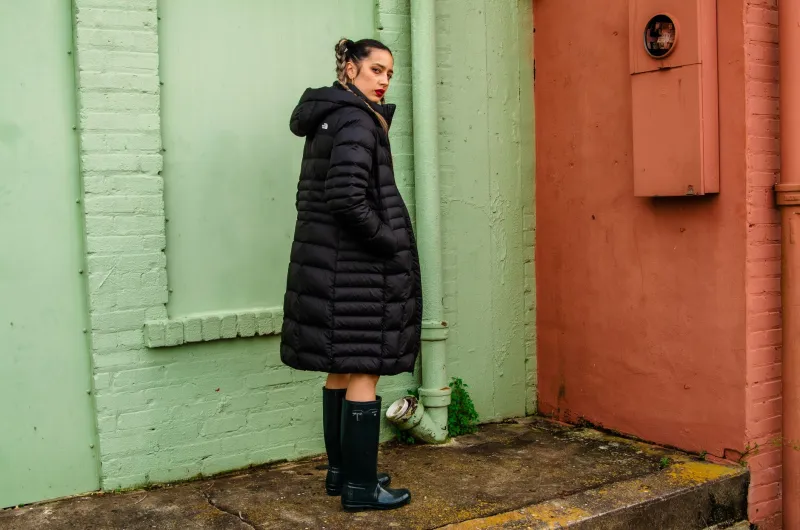
A puffer is not the natural home of polish, which is exactly why the wrist matters. Choose a puffer with a ribbed inner cuff, then pair it with knit mittens that have a longer cuff. Let the mitten cuff overlap the jacket sleeve by about an inch.
The texture contrast does the styling: nylon against wool, smooth against ribbed. You do not need jewelry here. The mitten cuff is the accessory. If you want one small piece, go for a tiny silver hoop or stud rather than a bracelet—wrist real estate is already occupied.
This is the look for school pickup, dog walks, and the kind of Saturday when you are outside more than you planned.
Look 3: Peacoat, Wool-Lined Gloves, and a Peek of Sweater
Peacoats often have sleeves that run long. Instead of letting the coat sleeve cover the glove, try a sweater with a slightly longer ribbed cuff. Let the sweater cuff show just beyond the coat sleeve, then pull on wool-lined leather gloves. You get three quiet layers at the wrist: coat, knit, glove.
That little peek of sweater is the design move. It softens the peacoat’s structure and makes the glove look like part of the plan. Keep the glove slim so the layers stay neat. A small stud earring is enough jewelry; the wrist is already busy in a good way.
Look 4: Shearling or Teddy Coat, Suede Gloves, and a Slim Bangle
Fluffy coats need a slim glove. If the coat has volume, a bulky glove makes the whole arm look stuffed. Choose a close-fitting suede or smooth leather glove in chocolate, black, or deep green. Let the coat sleeve end just above the glove cuff so the suede gets a clean moment.
A thin bangle can work here if it sits over the glove cuff without digging in. Otherwise, skip it. The point is contrast: soft coat, sleek glove, one hard little line of metal if it feels right. This is the outfit for a holiday lunch, a museum afternoon, or any day you want to look like you tried without looking like you tried.
Look 5: Weatherproof Parka, Liner Gloves, and a Low-Profile Watch
For slush, wind, and the kind of cold that makes you walk faster, start with a parka that has an adjustable cuff. Wear a thin liner glove underneath and a low-profile watch tucked under the sleeve so only the face shows. The watch is the quiet piece—no bracelet stack, no dangling charms.
This is practical styling, not precious styling. The glove gap here is really a glove overlap: sleeve over watch, watch over glove, glove over wrist. It keeps the cold out and still looks neat when you push the sleeve up to pay for coffee.
The Five-Minute Mirror Check
Before you leave, put the coat and gloves on and bend your arms. Check three things: Does the sleeve ride up? Does the glove cuff bunch? Is there one clear transition point? If the answer is no, no, and yes, you are done.
Then check the jewelry in daylight. Metal should match the hardware on your coat—silver with silver zippers, gold with brass buckles—or be deliberately mixed. One quiet piece is usually enough. Two is a choice. Three is a jewelry box accident.
Leave a Little Room
The glove gap is not a trend. It is a small design habit: leave a little room at the wrist, then finish it. A half inch of leather, a ribbed mitten cuff, a thin bracelet over a glove—these are tiny moves. But they are the difference between an outfit that stops at the coat and one that carries all the way to the hand.